
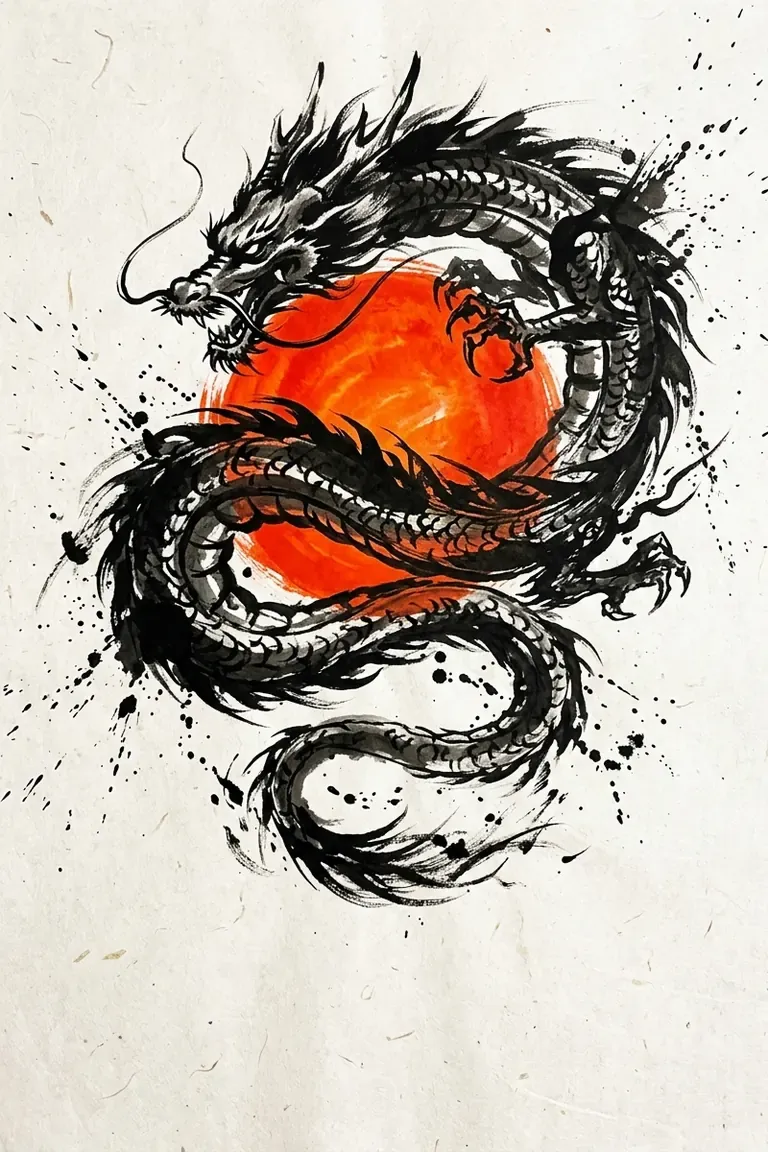
Fifth in the cycle
The World History Encyclopedia article on the dragon calls it the fifth sign of the Chinese zodiac, and a page on chinaculture.org says the same.
The Key Concepts in Chinese Thought and Culture entry on the zodiac says the animals were associated with the twelve Earthly Branches, each representing a year. In its combined list of animals and branches, the Dragon appears as chenlong.
Smithsonian Magazine calls the dragon the only mythological animal in the zodiac system, and the chinaculture.org page says it is the only zodiac animal that does not exist in the natural world.
Two legends, told separately
In the race legend Smithsonian Magazine retells, a deity often identified as the Jade Emperor calls all the animals to a race, and the first twelve to finish are included in the zodiac calendar. The dragon, expected to win easily because of its powers of flight, stops halfway to bring water to a village in a drought. The article says this immortalized the animal as a symbol of selfless benevolence.
The Lam Museum’s page tells a different legend, in which the Jade Emperor needs twelve palace guards. Tiger and Dragon think it unfair but can only settle behind Ox. Rabbit challenges Dragon to a race and wins. The museum adds that this is only a story.
Emperors, rain and luck
A page on chinaculture.org says that in traditional Chinese culture the dragon symbolizes imperial power and high status, as well as good fortune and success.
The World History Encyclopedia article says the populace in general considered the dragon a lucky symbol and bringer of wealth, and that ancient farmers thought dragons brought much-needed rains. It also says the dragon associated with the emperor always had five claws, to tell it apart from lesser dragons with four.
Traits and beliefs the sources mention
The chinaculture.org page describes people born in the Year of the Dragon as physically vigorous, full of energy and highly ambitious, and says they do not easily admit defeat. It also says they may be rather irascible and expect a lot from others.
Smithsonian Magazine reports that birth rates in China tend to boom when the Year of the Dragon arrives, and that many parents believe a child born then will be destined for success.
Dragons in art
The National Palace Museum describes an anonymous Song dynasty painting called Beneficent Rain. A dragon with four bright claws on each foot coils among dark clouds and gazes down at a smaller aquatic dragon in the lower left corner.
The World History Encyclopedia article names a C-shaped jade dragon of the Hongshan culture, found in eastern Inner Mongolia, as the earliest known depiction of a dragon.
Every Dragon year, 1900 to 2100
Each row is one lunar year of the Dragon, from its lunar new year to the day before the next one. The element comes from the stem of the year.
| Year | Stem-branch | Element | Yin or yang | Starts | Ends |
|---|---|---|---|---|---|
| 1904 | Jia-chen 甲辰 | Wood | yang | 16 February 1904 | 3 February 1905 |
| 1916 | Bing-chen 丙辰 | Fire | yang | 3 February 1916 | 22 January 1917 |
| 1928 | Wu-chen 戊辰 | Earth | yang | 23 January 1928 | 9 February 1929 |
| 1940 | Geng-chen 庚辰 | Metal | yang | 8 February 1940 | 26 January 1941 |
| 1952 | Ren-chen 壬辰 | Water | yang | 27 January 1952 | 13 February 1953 |
| 1964 | Jia-chen 甲辰 | Wood | yang | 13 February 1964 | 1 February 1965 |
| 1976 | Bing-chen 丙辰 | Fire | yang | 31 January 1976 | 17 February 1977 |
| 1988 | Wu-chen 戊辰 | Earth | yang | 17 February 1988 | 5 February 1989 |
| 2000 | Geng-chen 庚辰 | Metal | yang | 5 February 2000 | 23 January 2001 |
| 2012 | Ren-chen 壬辰 | Water | yang | 23 January 2012 | 9 February 2013 |
| 2024 | Jia-chen 甲辰 | Wood | yang | 10 February 2024 | 28 January 2025 |
| 2036 | Bing-chen 丙辰 | Fire | yang | 28 January 2036 | 14 February 2037 |
| 2048 | Wu-chen 戊辰 | Earth | yang | 14 February 2048 | 1 February 2049 |
| 2060 | Geng-chen 庚辰 | Metal | yang | 2 February 2060 | 20 January 2061 |
| 2072 | Ren-chen 壬辰 | Water | yang | 19 February 2072 | 6 February 2073 |
| 2084 | Jia-chen 甲辰 | Wood | yang | 6 February 2084 | 25 January 2085 |
| 2096 | Bing-chen 丙辰 | Fire | yang | 25 January 2096 | 11 February 2097 |
Sources
- The Dragon in Ancient China (World History Encyclopedia)
- Why Is the Year of the Dragon Considered So Lucky? (Smithsonian Magazine)
- The Chinese Zodiac / Animal of the Year (Foreign Language Teaching and Research Press)
- The Chinese Zodiac (Timothy S. Y. Lam Museum of Anthropology)
- The NPM Zoo: Animal Paintings in the Museum Collection_Animals of the Chinese Zodiac (National Palace Museum)
- Chinese Zodiac