
Third in the cycle
The Tiger comes third among the twelve zodiac animals, after the Rat and the Ox, in the order the Lam Museum lists. A page on chinaculture.org and the Royal Ontario Museum also place it third.
An entry on english.scio.gov.cn, credited to the Academy of Contemporary China and World Studies, says that in Chinese folk culture the twelve earthly branches are paired with the twelve zodiac animals.
The legend of the line
One legend, as the Lam Museum tells it, has the Jade Emperor choosing twelve animals as palace guards. Ox stood first in line until Rat secretly climbed onto Ox’s back and jumped in front. Tiger and Dragon thought this was unfair, but they could only settle behind Ox. The museum’s page adds that this is only a story.
What the tiger stands for
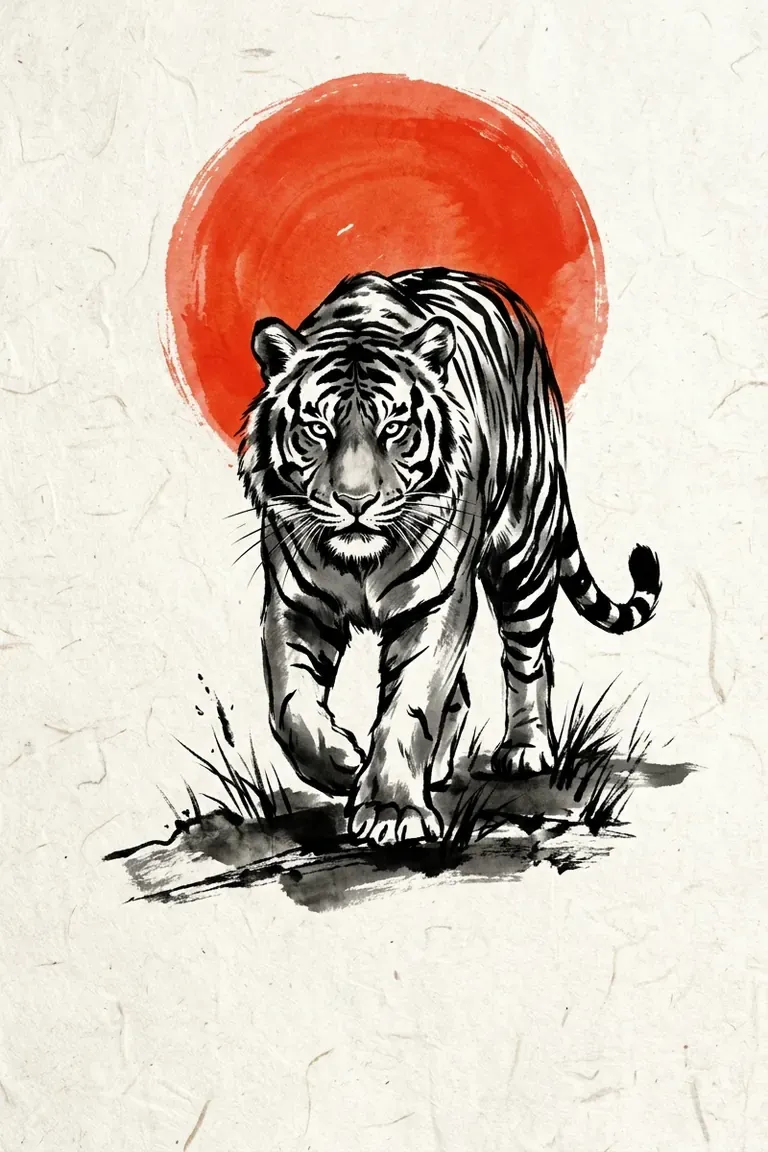
A page on chinaculture.org calls the tiger the King of Beasts, respected by humans and animals alike for its power and dignity. It says people put tiger images on their doorways during the Han dynasty to ward off misfortune, and that in many rural areas infants are still dressed in tiger shoes.
A V&A blog post by Ming Wilson says the tiger devours human beings but also eats demons, and so has long been considered an evil-quelling animal. The Royal Ontario Museum calls the tiger a popular decorative motif associated with auspiciousness and protection from evil spirits.
Traits the tradition gives
The Lam Museum describes each zodiac year as represented by an animal and its reputed attributes. For the tiger, the Royal Ontario Museum says people born in its year are said to be adventurous, courageous and charismatic, often looked at as the leader of the group. The page on chinaculture.org describes them as strong and self-confident by nature, tending to be risk-takers.
Tigers in museum objects
The Royal Ontario Museum says tiger hunting was an important social event during the Shang dynasty, and that the king kept tiger bones as a trophy to signify the royal hunt. Its own tiger bone was inscribed to document the royal event. Several Cizhou-ware pillows in its Chinese collection, made in the Song and Jin dynasties, are in the shape of a tiger or decorated with the tiger motif. It also says an embroidered tiger on the insignia of Qing dynasty military officials signified an officer of the fourth rank.
The V&A post’s example for the tiger is a stoneware tiger-shaped pillow of the Jin dynasty. Wilson adds that tiger-shaped pillows would protect the user from malicious spirits at night.
Every Tiger year, 1900 to 2100
Each row is one lunar year of the Tiger, from its lunar new year to the day before the next one. The element comes from the stem of the year.
| Year | Stem-branch | Element | Yin or yang | Starts | Ends |
|---|---|---|---|---|---|
| 1902 | Ren-yin 壬寅 | Water | yang | 8 February 1902 | 28 January 1903 |
| 1914 | Jia-yin 甲寅 | Wood | yang | 26 January 1914 | 13 February 1915 |
| 1926 | Bing-yin 丙寅 | Fire | yang | 13 February 1926 | 1 February 1927 |
| 1938 | Wu-yin 戊寅 | Earth | yang | 31 January 1938 | 18 February 1939 |
| 1950 | Geng-yin 庚寅 | Metal | yang | 17 February 1950 | 5 February 1951 |
| 1962 | Ren-yin 壬寅 | Water | yang | 5 February 1962 | 24 January 1963 |
| 1974 | Jia-yin 甲寅 | Wood | yang | 23 January 1974 | 10 February 1975 |
| 1986 | Bing-yin 丙寅 | Fire | yang | 9 February 1986 | 28 January 1987 |
| 1998 | Wu-yin 戊寅 | Earth | yang | 28 January 1998 | 15 February 1999 |
| 2010 | Geng-yin 庚寅 | Metal | yang | 14 February 2010 | 2 February 2011 |
| 2022 | Ren-yin 壬寅 | Water | yang | 1 February 2022 | 21 January 2023 |
| 2034 | Jia-yin 甲寅 | Wood | yang | 19 February 2034 | 7 February 2035 |
| 2046 | Bing-yin 丙寅 | Fire | yang | 6 February 2046 | 25 January 2047 |
| 2058 | Wu-yin 戊寅 | Earth | yang | 24 January 2058 | 11 February 2059 |
| 2070 | Geng-yin 庚寅 | Metal | yang | 11 February 2070 | 30 January 2071 |
| 2082 | Ren-yin 壬寅 | Water | yang | 29 January 2082 | 16 February 2083 |
| 2094 | Jia-yin 甲寅 | Wood | yang | 15 February 2094 | 4 February 2095 |
Sources
- The Year of the Tiger (Royal Ontario Museum)
- The 12 zodiac animals at the V&A (V&A)
- The Chinese Zodiac (Timothy S. Y. Lam Museum of Anthropology)
- Chinese Zodiac
- Heavenly Stems and Earthly Branches (The Academy of Contemporary China and World Studies)