
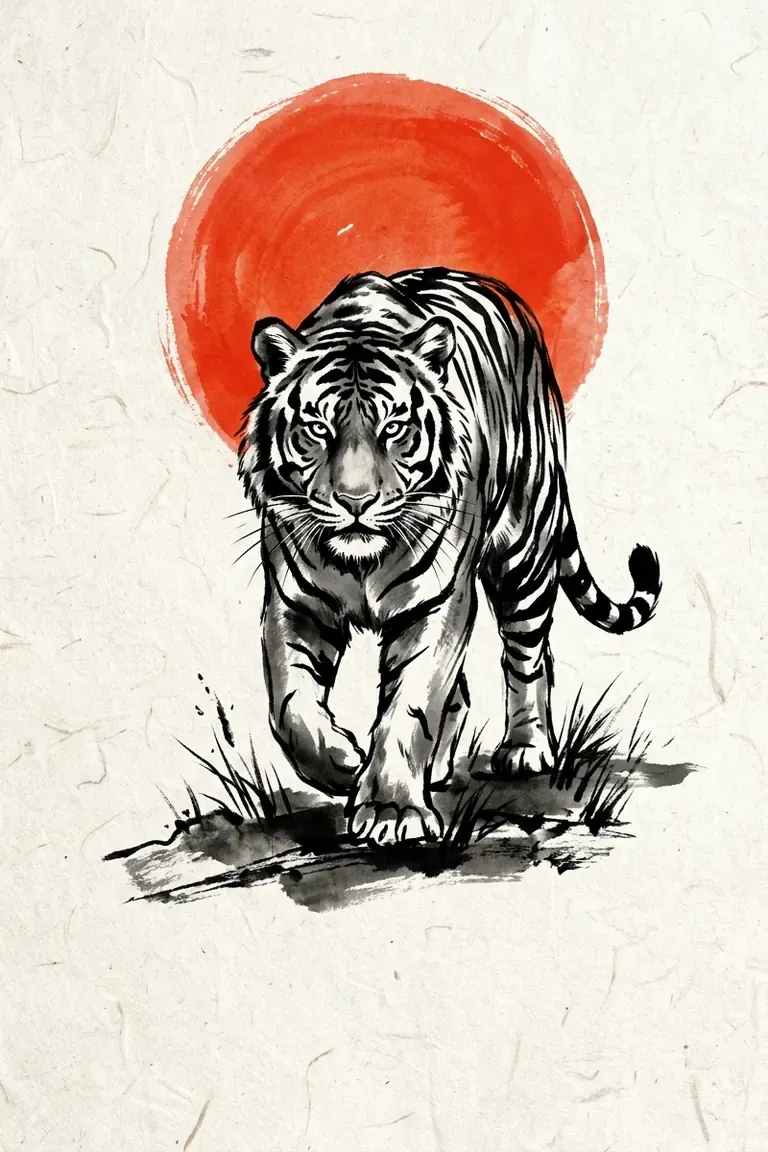
1950 is the year of the Metal Tiger (yang), from 17 February 1950 to 5 February 1951.
1950 Chinese zodiac year at a glance
- Animal
- Tiger 寅
- Element
- Metal
- Yin or yang
- yang
- Stem and branch
- Geng-yin 庚寅
- Dates
- Friday 17 February 1950 to Monday 5 February 1951
Born in January or February?
The Chinese year starts on the lunar new year, not on 1 January. If you were born from 1 January to 16 February 1950, your sign is the Earth Ox of 1949, which began on 29 January 1949. From 17 February 1950 you are a Metal Tiger.
The other side works the same way. The Metal Tiger year ends on 5 February 1951, so people born from 1 January to 5 February 1951 are still Metal Tigers. From 6 February 1951 the sign is the Metal Rabbit of 1951.
Nearby years
About the Tiger
One legend has the Jade Emperor choosing twelve animals as palace guards. Ox stood first in line until Rat secretly climbed onto Ox's back and jumped in front. Tiger and Dragon thought this was unfair, but they could only settle behind Ox. The Lam Museum, which tells it, adds that this is only a story.
The tiger is called the King of Beasts, respected by humans and animals alike for its power and dignity. During the Han dynasty people put images of tigers on their doorways to ward off misfortune, and in many rural areas infants are still dressed in tiger shoes.
A V&A blog post by Ming Wilson says the tiger devours human beings but also eats demons, and so has long been considered an evil-quelling animal. The tiger is also a popular decorative motif associated with auspiciousness and protection from evil spirits.
About Metal
The five phases exist in various cycles, the two most common being mutual generation and mutual conquest. In the generation cycle, earth generates metal (ore) and metal generates water (melting). In the conquest cycle, fire conquers metal (melting) and metal conquers wood (chopping).
Han thinkers used a "mutual production" series (earth produced metal, metal produced water) and a "mutual conquest" series (metal conquered wood, fire conquered metal).
Zou Yan and his followers used the conquest cycle to articulate their theory of dynastic transmission, in which a dynasty ruled by the power of the wood phase would be conquered by a new ruling house associated with metal, which in turn would be conquered by a dynasty of fire.
Try it with your birth date.
Find your Chinese zodiac sign