
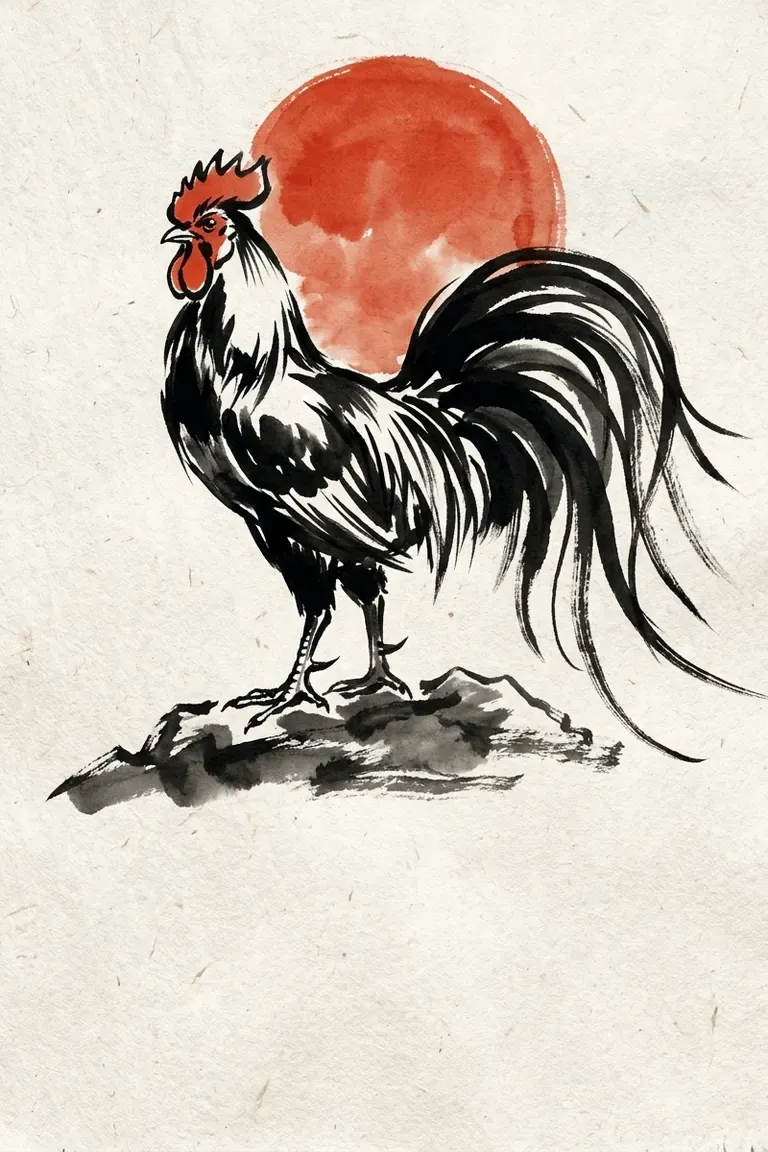
1981 is the year of the Metal Rooster (yin), from 5 February 1981 to 24 January 1982.
1981 Chinese zodiac year at a glance
- Animal
- Rooster 酉
- Element
- Metal
- Yin or yang
- yin
- Stem and branch
- Xin-you 辛酉
- Dates
- Thursday 5 February 1981 to Sunday 24 January 1982
Born in January or February?
The Chinese year starts on the lunar new year, not on 1 January. If you were born from 1 January to 4 February 1981, your sign is the Metal Monkey of 1980, which began on 16 February 1980. From 5 February 1981 you are a Metal Rooster.
The other side works the same way. The Metal Rooster year ends on 24 January 1982, so people born from 1 January to 24 January 1982 are still Metal Roosters. From 25 January 1982 the sign is the Water Dog of 1982.
Nearby years
About the Rooster
According to legend there were ten suns in the sky and a hero shot down nine of them, leaving only one that dared not rise. The legend goes on that a rooster was sent to call for the sun's rise every morning, and that it was later voted one of the twelve zodiac animals.
In Chinese, the character for "chicken" is "ji," a homonym for "fortune," and the chicken's crest stands for "official" and its call for "fame." As a result, the ancients often considered the chicken an auspicious animal. The rooster was venerated as the "Bird of Virtues" for possessing civil talent, military skill, courage, benevolence and fidelity.
The rooster traditionally symbolizes integrity, honesty, diligence and bravery.
About Metal
The five phases exist in various cycles, the two most common being mutual generation and mutual conquest. In the generation cycle, earth generates metal (ore) and metal generates water (melting). In the conquest cycle, fire conquers metal (melting) and metal conquers wood (chopping).
Han thinkers used a "mutual production" series (earth produced metal, metal produced water) and a "mutual conquest" series (metal conquered wood, fire conquered metal).
Zou Yan and his followers used the conquest cycle to articulate their theory of dynastic transmission, in which a dynasty ruled by the power of the wood phase would be conquered by a new ruling house associated with metal, which in turn would be conquered by a dynasty of fire.
Try it with your birth date.
Find your Chinese zodiac sign