
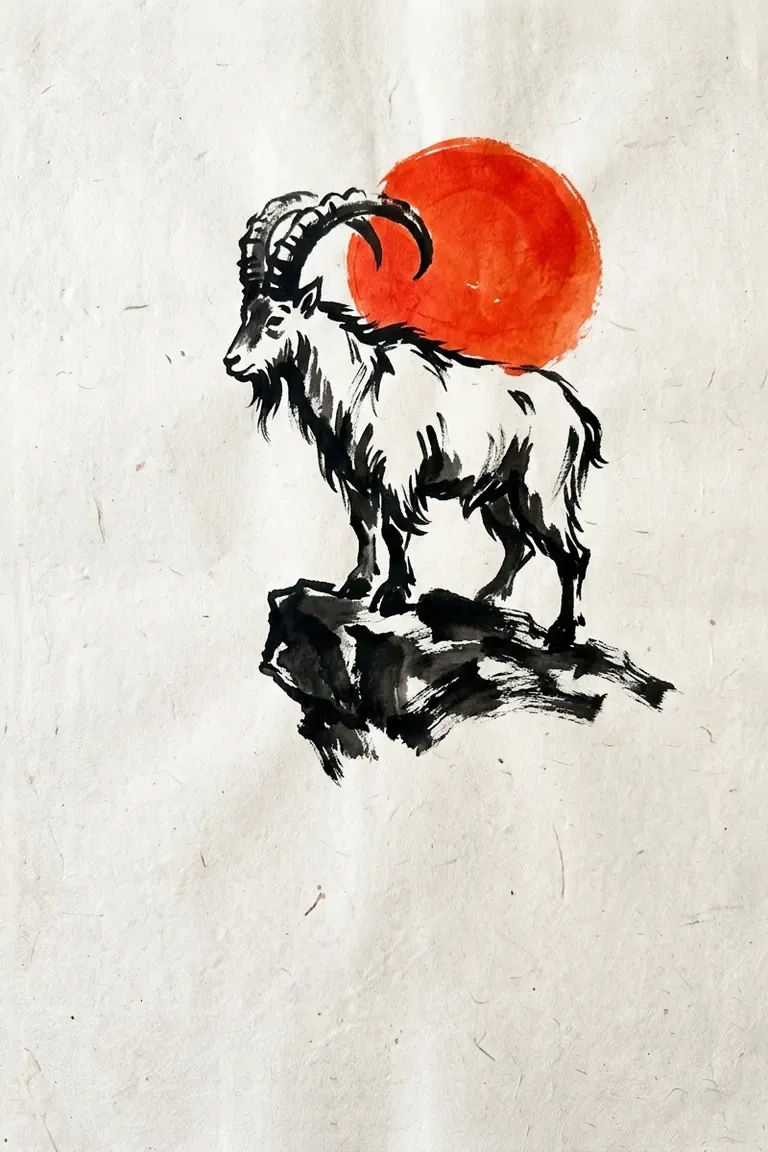
1955 is the year of the Wood Goat (yin), from 24 January 1955 to 11 February 1956.
1955 Chinese zodiac year at a glance
- Animal
- Goat 未
- Element
- Wood
- Yin or yang
- yin
- Stem and branch
- Yi-wei 乙未
- Dates
- Monday 24 January 1955 to Saturday 11 February 1956
Born in January or February?
The Chinese year starts on the lunar new year, not on 1 January. If you were born from 1 January to 23 January 1955, your sign is the Wood Horse of 1954, which began on 3 February 1954. From 24 January 1955 you are a Wood Goat.
The other side works the same way. The Wood Goat year ends on 11 February 1956, so people born from 1 January to 11 February 1956 are still Wood Goats. From 12 February 1956 the sign is the Fire Monkey of 1956.
Nearby years
About the Goat
In Chinese, the animal is called yang. Colin Mackerras of Griffith University writes that the word can mean sheep, goat or even other similar horned animals, such as the gazelle. To be specific, a goat is a "mountain yang" (shanyang) and a sheep is sometimes a "cotton yang" (mianyang).
English has three names for the same year: sheep, ram and goat. Mackerras calls all three usages correct, and the V&A's blog speaks of the ram. Mackerras adds that Japan reads the animal as sheep, while Vietnam identifies it as goat.
The Goat is eighth in the Chinese zodiac. The animals were associated with the twelve earthly branches in a twelve-year cycle, each animal representing a year, and the combined list gives the sheep's entry as weiyang.
About Wood
Han thinkers used the system to account for an ordered sequence or cycle of change. In the mutual production series, wood produced fire and water produced wood. In the mutual conquest series, wood conquered earth and metal conquered wood.
In the cycles, each step that involves wood has an image: wood generates fire (burning), water generates wood (irrigation), metal conquers wood (chopping) and wood conquers earth (plowing). Zou Yan and his followers used the conquest cycle for a theory of dynastic transmission, in which a dynasty ruled by the power of the wood phase would be conquered by a house associated with metal.
Try it with your birth date.
Find your Chinese zodiac sign