
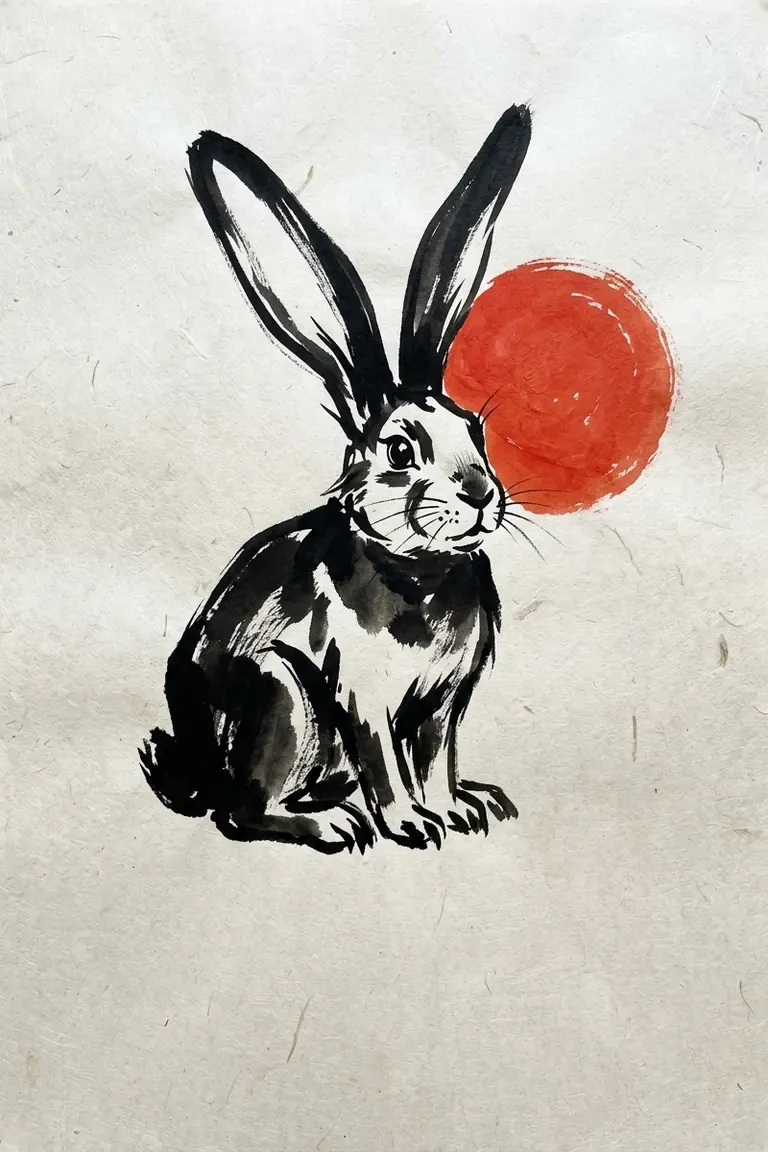
1999 is the year of the Earth Rabbit (yin), from 16 February 1999 to 4 February 2000.
1999 Chinese zodiac year at a glance
- Animal
- Rabbit 卯
- Element
- Earth
- Yin or yang
- yin
- Stem and branch
- Ji-mao 己卯
- Dates
- Tuesday 16 February 1999 to Friday 4 February 2000
Born in January or February?
The Chinese year starts on the lunar new year, not on 1 January. If you were born from 1 January to 15 February 1999, your sign is the Earth Tiger of 1998, which began on 28 January 1998. From 16 February 1999 you are an Earth Rabbit.
The other side works the same way. The Earth Rabbit year ends on 4 February 2000, so people born from 1 January to 4 February 2000 are still Earth Rabbits. From 5 February 2000 the sign is the Metal Dragon of 2000.
Nearby years
About the Rabbit
One legend says the Jade Emperor needed twelve animals as palace guards. Rat jumped in front of Ox in the line. Tiger and Dragon thought that was unfair, and so did Rabbit, who challenged Dragon to a race, won, and moved up closer to the front. The Lam Museum, which retells it, adds: "Of course, this is only a story."
Legend has it that the living things on the moon are Chang'e, a man called Wu Gang and a rabbit that pounds the elixir of immortality, so the rabbit is often associated with the moon. The V&A's entry for the Rabbit shows a detail of an emperor's summer court robe with the moon.
In traditional Chinese culture Jade Rabbit is another name for the moon. The National Palace Museum, which says both rabbit and hare, mentions "the hare accompanying Chang'e".
About Earth
Han thinkers used the system to account for an ordered sequence or cycle of change. In the "mutual production" series, "fire produced earth" and "earth produced metal". In the "mutual conquest" series, "wood conquered earth" and "earth conquered water".
The mutual conquest and mutual generation cycles are the two most common and widely used. The relations are written with a word in parentheses beside each: fire generates earth (ash), earth generates metal (ore), wood conquers earth (plowing) and earth conquers water (damming).
Zou Yan and his followers used the conquest cycle to articulate a theory of dynastic transmission, in which heaven would show favorable signs for each new dynasty: yellow for a dynasty ruled by the power of earth, and green for a dynasty of wood. In the conquest series, if a ruling dynasty's emblem was water, one might anticipate it being overcome by a dynasty whose emblem was earth.
Try it with your birth date.
Find your Chinese zodiac sign